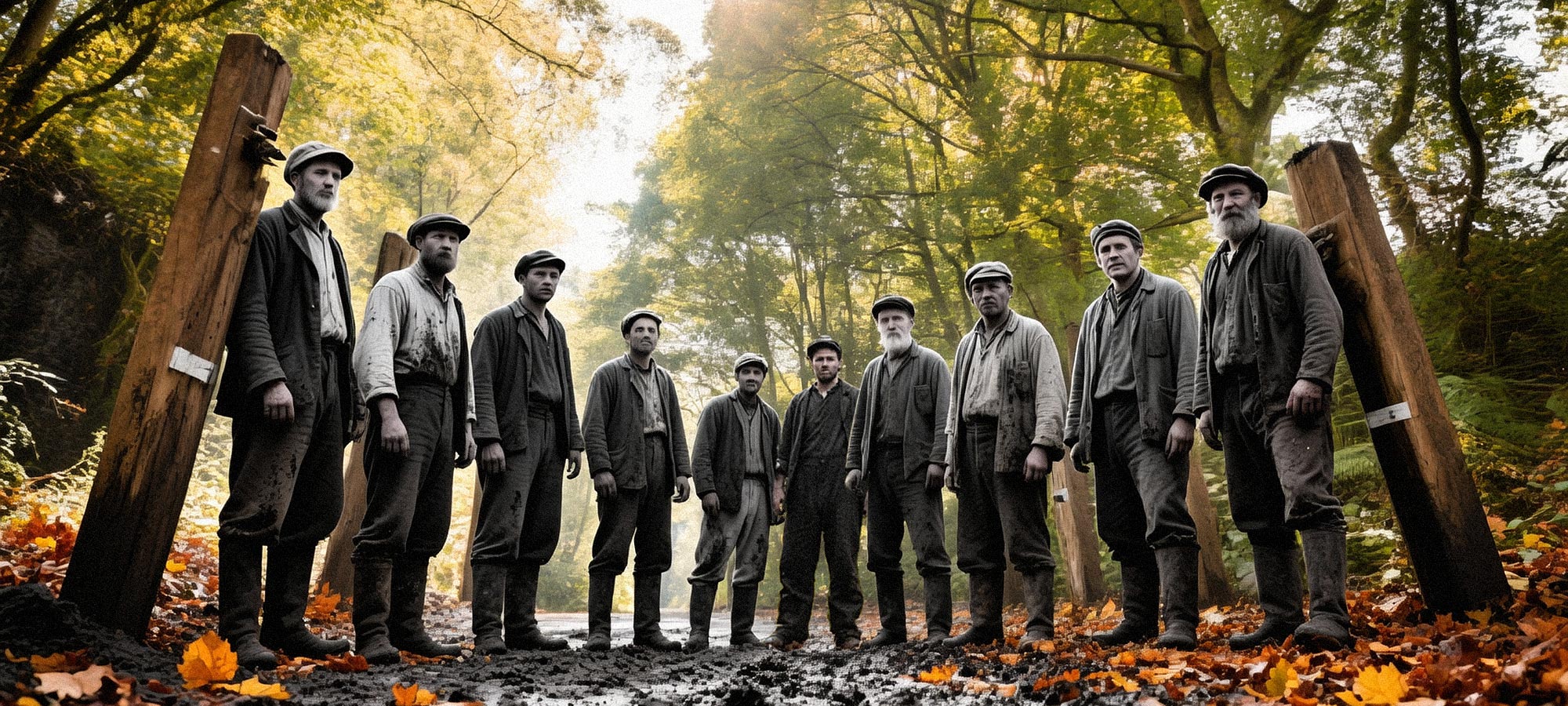
Circumstances of death
At around 7.15pm on the evening of Saturday 10th October 1874, George Sutcliffe was standing on the landing stage at the top of No.1 shaft, filling a skip with cement prior to it being lowered down to where three men were working. However William Saddle, who was employed to drive the portable engine located at the shaft, started it without warning, resulting in the skip being drawn up rapidly towards the pulley. Sutcliffe managed to jump clear, but the force was sufficient for the rope to break. The skip consequentially crashed through the landing stage and fell down the shaft.
Working at the bottom were 30-year-old Richard (Dick) Sutcliffe (son of George), Thomas Dyson and John Price. Sutcliffe was struck on the head and died instantly; the other two were seriously hurt. It was reported that Dyson later succumbed to his injuries in Halifax Infirmary but no records have been found to support this.
Richard Sutcliffe’s body was taken to the Royal Oak Inn at Ambler Thorn where an inquest was held on Tuesday 13th October. His father George was amongst those to give evidence. Saddle was unable to provide any explanation as to why he had started the engine but did admit that the accident was his own fault and that no one else was to blame. Another witness stated that the signal for starting the engine was very quiet and suggested that Saddle might have mistakenly thought it had been sounded. It was concluded that the accident resulted from a tragic lapse in concentration by a man who, the inquest heard, was a competent and careful employee. He was reported to have been sober at the time.
Surgeon John Fawthrop told the inquest that his examination of the body found a compound fracture of the skull which would have resulted in immediate death. The jury returned a verdict of “accidental death” and suggested that the signal for starting the engine should be made louder.
Biographical information
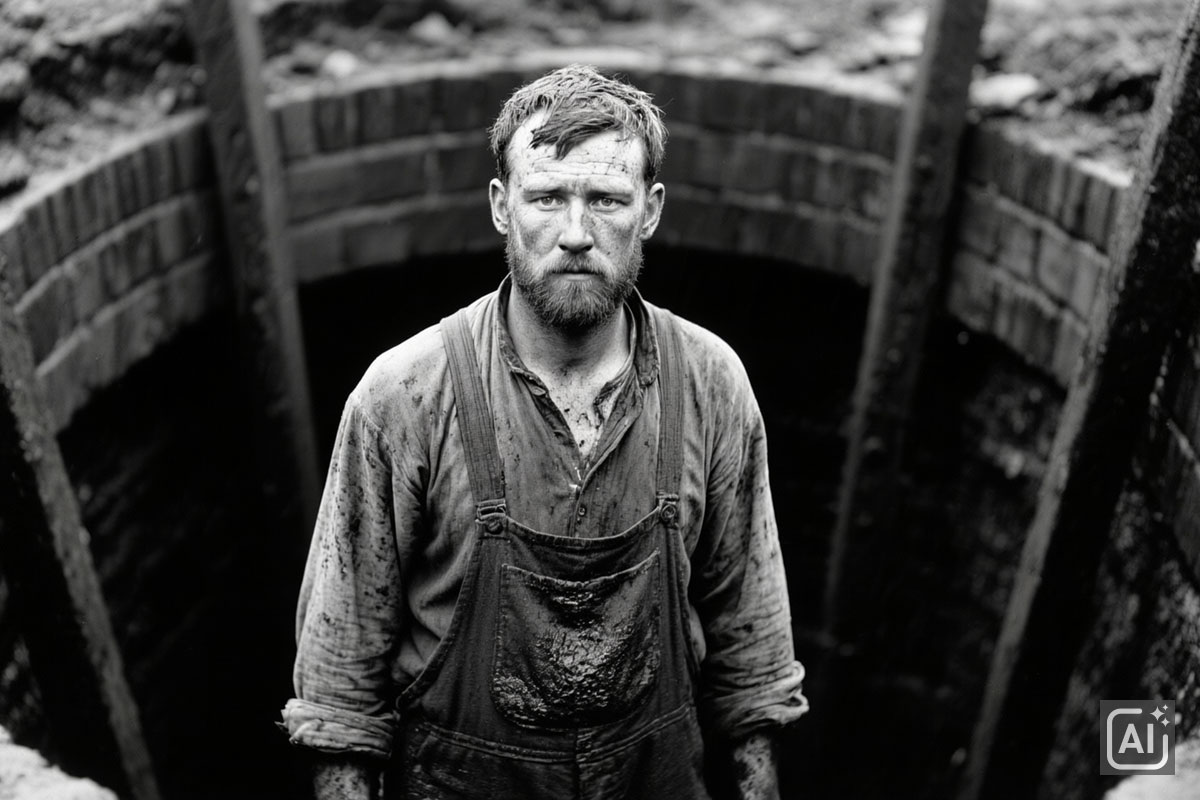
The above photo is an AI visualisation.
Richard Sutcliffe was born in Bradford in 1844, the second of nine children (seven sons, two daughters) to father George and mother Elizabeth. The family was mostly employed in the wool trade and lived in a number of local villages including Guiseley, Ovenden and Northowram. It should come as no surprise then that, by the age of 16, Richard was labouring in a woollen mill.
The 1871 census records ‘Dick’ as a married man, residing with his wife Elizabeth and 10-month old daughter, Cordelia. They lived alongside his extended family at Mill Cottages in Northowram. By this time, both he and his father had become brick labourers. Richard subsequently fathered another daughter and a son.
Four days after his death, Richard Sutcliffe was buried at St Thomas’ Church in Charlestown, Halifax.