Circumstances of death
On Monday 29th May 1876, three miners were working towards the north end of the tunnel at Hole Bottom. Amongst them was 33-year-old Richard Jones, although he went by a different name on the works, that of William Brear. This was a common custom amongst the navvies.
Having fired a number of shots, the men returned to clear away the resulting debris. Using a pick, Jones started to work a loose piece of stone which was in the way of the next set of holes to be drilled. After a short time, fearing that the stone might fall, his workmates told Jones to leave it. However their warning came too late. As he retreated, the stone - weighing about 4cwt - broke away and crushed him “terribly”.
Although he was quickly extricated, Jones passed away in the neighbourhood of Lister Hills as he was being taken to Bradford Infirmary. After being seen by Dr Lee, whose surgery was nearby, his remains were taken to the ‘dead house’ at the local workhouse.
Two days later, an inquest was held at Armstrong’s Hotel, Bradford, before William Barstow, the coroner. A number of navvies gave evidence but no blame was attached to anyone but Jones himself. A verdict of “accidental death” was returned.
Biographical information

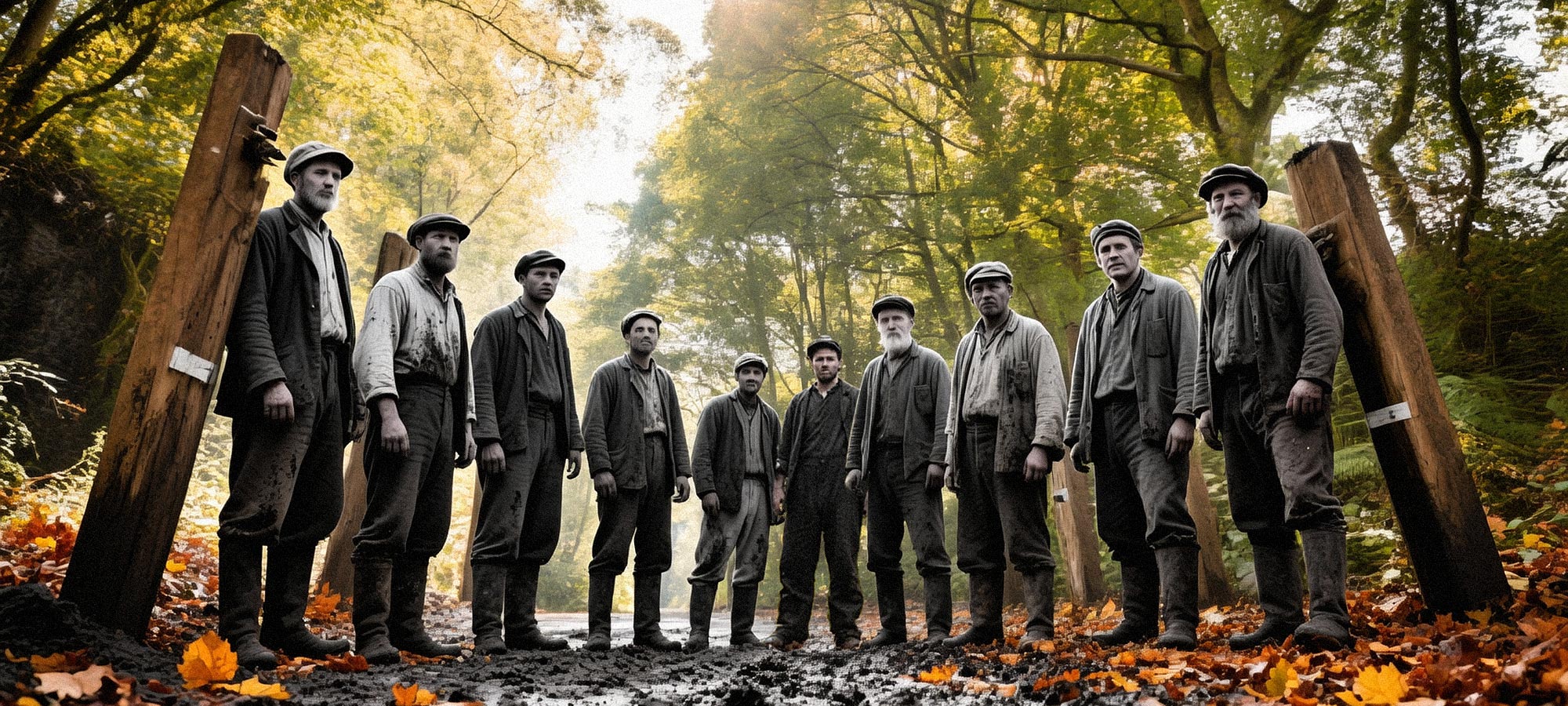
The above photo is an AI visualisation.
It has not been possible to confirm any biographical information on Richard Jones. His death certificate confirms that his “right leg [was] broken and body bruised from a large stone falling on him in Queensbury Tunnel on Ovenden and Thornton Railway. Lived about three hours.”
Richard was buried at St John’s Church in Clayton on 1st June 1876.
The 1871 census records a Richard Jones with a birth year of 1843 boarding with Robert and Barbara Thistlethwaite at Ingleton, North Yorkshire. Born in Shropshire, he was unmarried and working as a quarrier.