Circumstances of death
On the morning of Thursday 17th August 1876, miner Llewellyn Jones set to work drilling a hole in No.2 shaft which had been started by men on the night shift. He was not aware however that the hole had already been completed and charged. There was an immediate explosion, causing injuries to his face and right arm.
Jones was assisted home and medical help sought. For several days, he appeared to be progressing favourably; however, on Tuesday 22nd, “lockjaw” (tetanus) set in and, despite the efforts of medical practitioners, he passed away in great agony on the morning of Thursday 24th August.
Biographical information
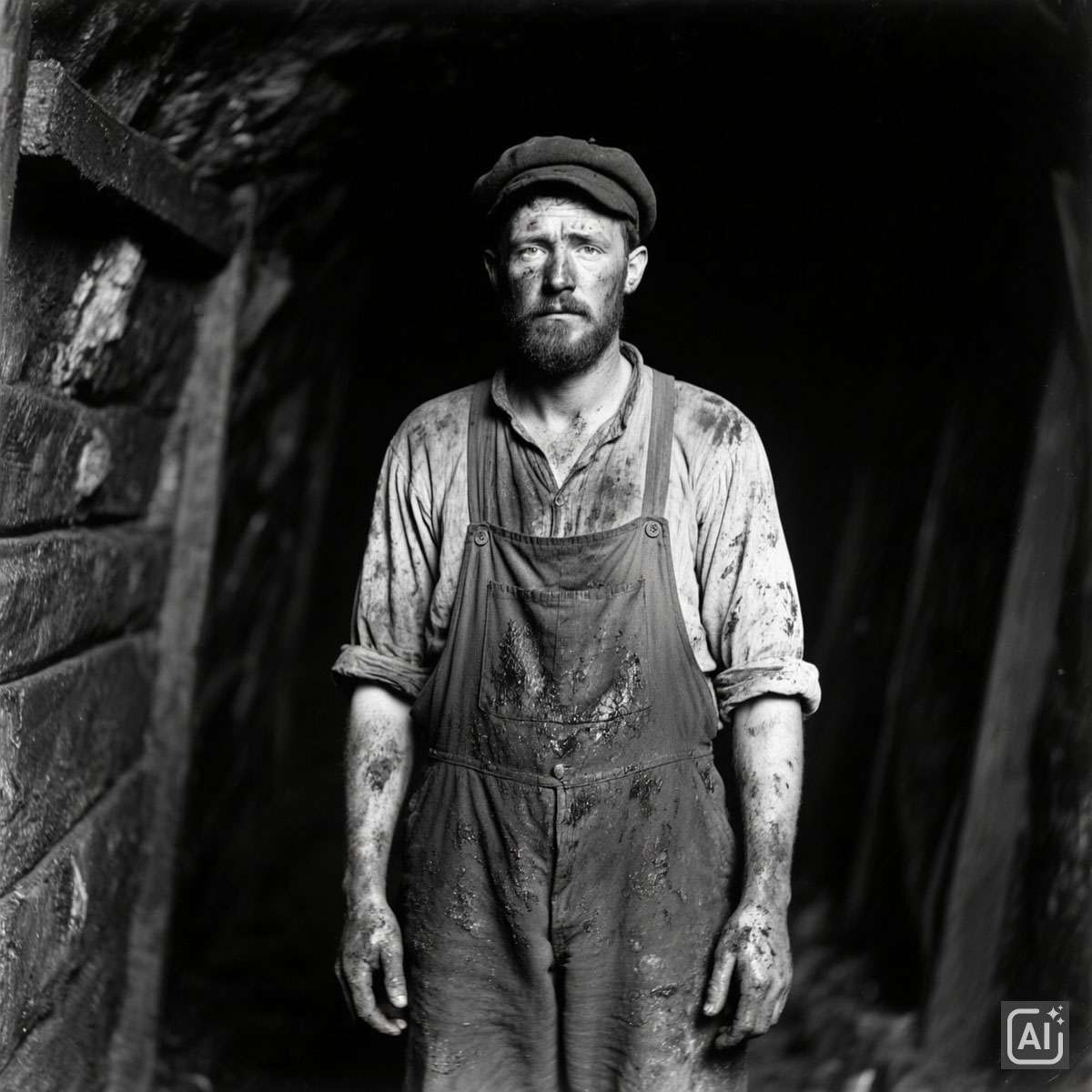
The above photo is an AI visualisation.
The death of a Llewellyn Jones was recorded in Bradford within the correct timeframe, suggesting his age was 31. A man of the same name was a witness at the inquest into the deaths of Henry Jones and John Gough, who were killed in similar circumstances. He was a Foreman and had been working on the new line since about August 1875.
Research indicates that 16 Llewellyn Jones’ were born in 1845±2 years, of whom all but one were still alive in 1881. The remaining man came from Glyncorrwg in South Wales and was the eldest of at least eight children to father Thomas and mother Gwenllian. Collectively the family farmed about 100 acres of land at Llangynwyd near Maesteg, where Llewellyn lived for much of his life. By 1871, he was employed as a weigher at an ironworks, working alongside three of his brothers.
It has proved impossible to confirm whether this Llewellyn Jones is the same man who lost his life in Queensbury Tunnel.