Circumstances of death
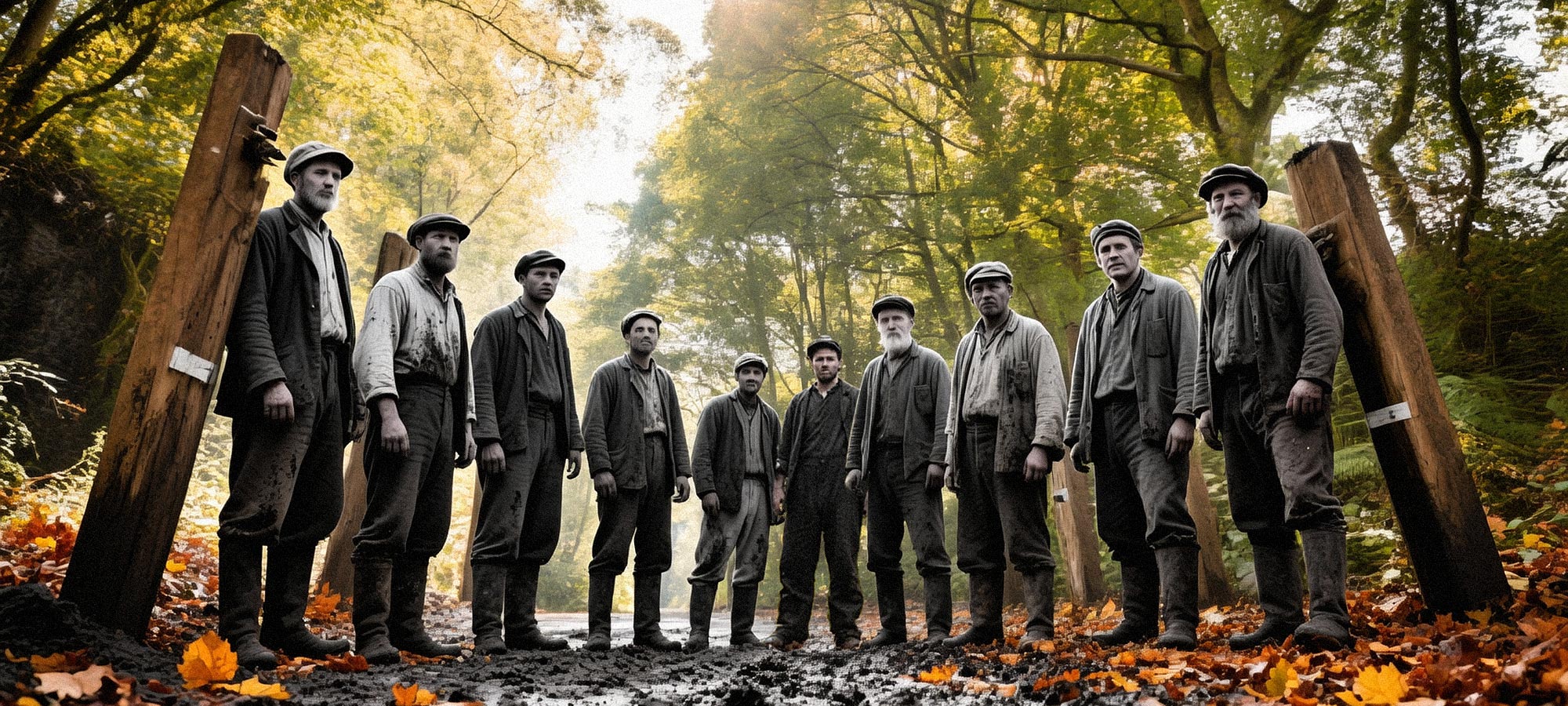
On the morning of Tuesday 7th December 1875, miners Henry Jones, 39, and John Gough, 40, were part of a 20-strong team rapidly pushing forward excavation work towards the south end of the tunnel. A three-shift system was in operation, allowing progress to be maintained around the clock.
At around 3.40am, a number of shots were fired, after which the men returned to the working face under the impression that they had all gone off successfully. However, on inspection, Jones and Gough discovered that one of the charges had failed so they set about withdrawing it. During this process it suddenly exploded, killing both men and injuring several of their workmates. Works inspector James Albrighton was quickly in attendance to render assistance. In the most serious condition was John Rowley who suffered a compound fracture of the arm and injuries to the head. He was removed to Halifax Infirmary.
Two days later, an inquest was held at the Olive Branch Inn before J E Hill, the deputy coroner. The first witness was Henry Jones’ widow who stated that her husband had left home in Sunderland four weeks earlier to look for work. John Gough’s remains were identified by Evan Edwards, a miner from Ovenden.
Llewellyn Jones, from Bank Top in Ovenden, stated that he had been working on the new line for four months and, on the night of the accident, was fulfilling the role of Foreman. Also a miner, his shift had begun at 6.00pm the previous evening. He described how, during the day, men would drill and charge holes, ready for those on the night shift to fire. On Monday night, it was understood there were only six to deal with; however, at about 11.00pm, a seventh was located but they could not be certain whether it was charged. They inserted the shaft of a hammer to gauge its depth and found it to be about 18 inches. Although this was sufficient to accept a charge, they could not detect one.
By convention, when a hole was charged, a fuse would be attached to the dynamite cartridge extending 12-18 inches out of the hole. This was the case at the six holes identified as being ready for firing; the other had no such fuse.
After his supper, Llewellyn Jones was working in another part of the tunnel when he heard an explosion and shouting. He attended immediately and found John Gough lying ‘on the road’ [tramway]. He succumbed to his injuries within ten minutes. Henry Jones’ body was discovered shortly after, close to where the seventh hole had been located.
The jury returned a verdict of “accidental death”, but recommended that all shots should be fired by the men who charged them.
Biographical information
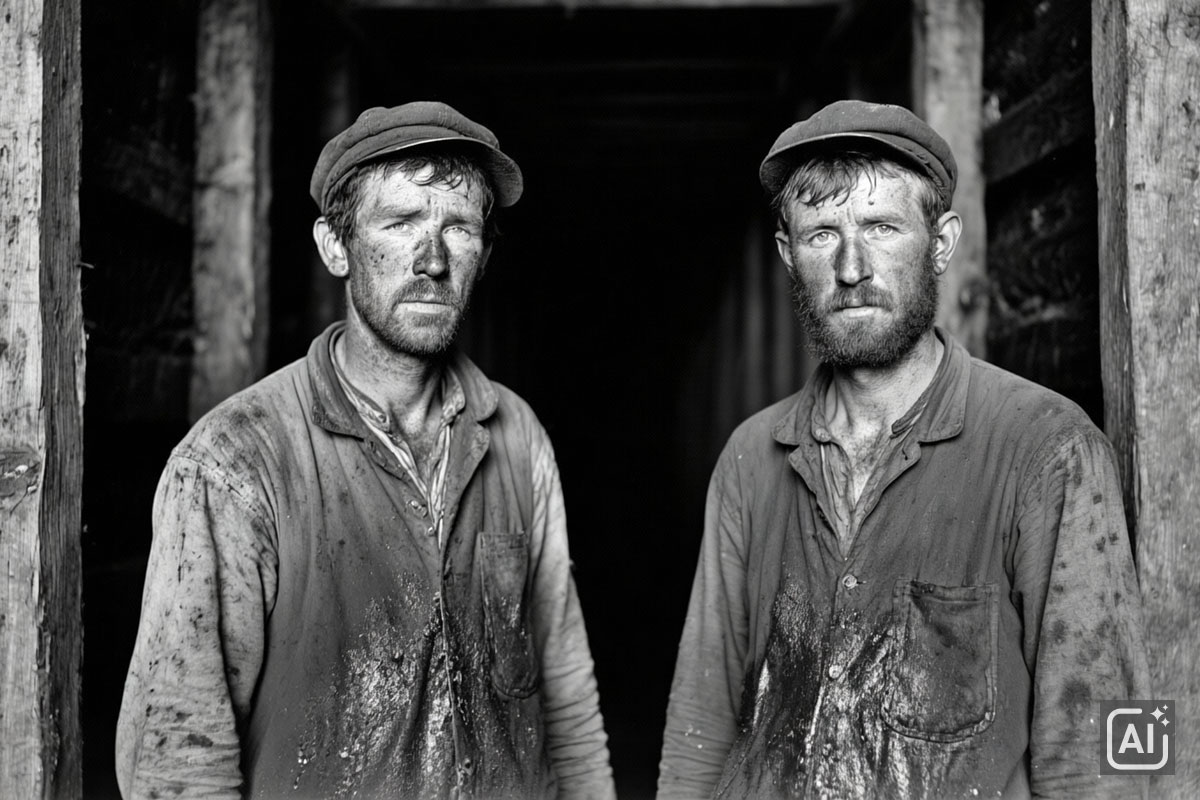
The above photo is an AI visualisation.
John Gough’s death certificate confirms that he was “about 40 years old” and lived for ten minutes after the explosion in which he sustained head injuries.
The 1871 census lists 70 John Goughs with a birth year of 1835±2 years, the majority of whom also appear in later censuses. The others can be mostly ruled out on the basis of status or occupation, but amongst the remainder is a John Gough who was born on Anglesey to father Thomas, a fowl merchant, and mother Grace. He was baptised in Bodedern, on the western side of the island, in July 1836.
Gough’s life is difficult to track, but it is possible that he married a girl called Gwenllian, two years his elder, from the ancient parish of Mynyddyslwyn in Monmouthshire. The couple were lodging there in 1861, John working as an agricultural labourer. However, ten years later, he is alone and closer to home, living in Ffestiniog with John and Ann Harris, and employed as a quarry labourer along with most of the town’s workforce.
It is clear that many of those who found work building the railway under Queensbury came from Wales and the leap from quarry labourer to tunnel miner is not a great one. It has though proved impossible to confirm whether this John Gough is the same man who lost his life at Queensbury.