Circumstances of death
At around 9.30am on the morning of Sunday 25th July 1875, 36-year-old plumber Henry Ingham was working with Robert Ford in No.4 shaft, repairing some pipework which was out of order. At this point in time, the shaft had been sunk to a depth of about 270 feet and, to reach the pipe, the pair had to lean out from a tub suspended about 150 feet down. This meant that neither man was fastened in. With the work finished, Ingham overbalanced and fell out, drowning in about 15 feet of water which had accumulated at the bottom.
An inquest was held at the New Dolphin Inn before William Barstow, the coroner. Ford described how he and the deceased had signalled to be drawn up, but they had been surprised by the pipe striking the side of the shaft in the darkness, resulting in Ingham’s fall. Ford was hoisted out, however he returned shortly after with George White to retrieve his workmate’s body.
A verdict of “accidental death” was returned, with a recommendation that belts, ropes and grappling irons should, in future, be provided to secure men into the tub when they were engaged in such dangerous activites. However the “overlooker of the works” stated that ropes were already available and it was the men’s own fault if they did not use them.
Biographical information

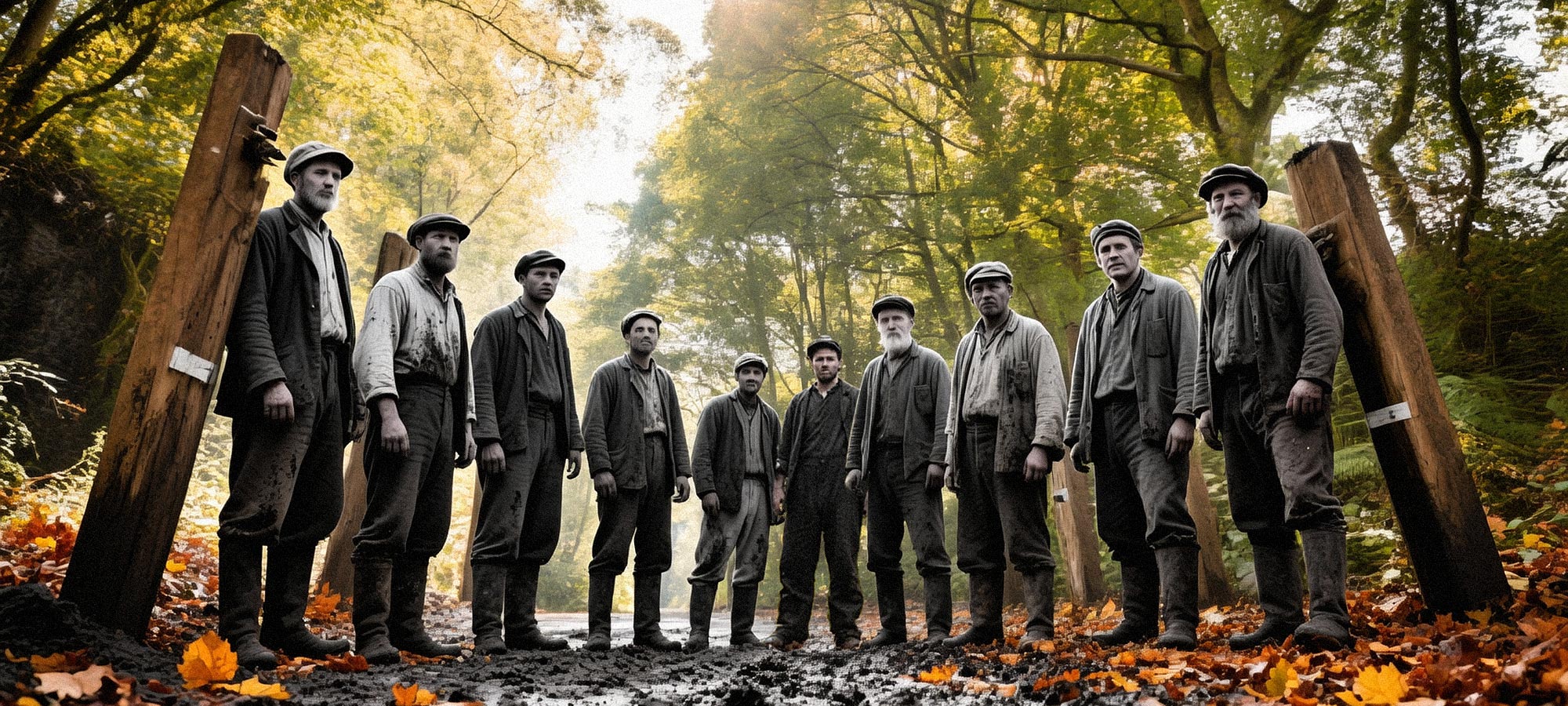
The above photo is an AI visualisation.
Henry Ingham was born in Thornton, just north of Queensbury, in 1838 where he lived amongst his extended family throughout his life. He was the second son of John and Hannah who were both weavers. Living at Mill Cottages, the 1851 census records 12-year-old Henry as a part-time spinner; his 5-year-old sister is earning as an errand girl. Living next door is 71-year-old Hannah Ingham, presumably their grandmother.
Henry married Margaret Dobson, also a weaver, on 2nd February 1862 at Bradford Parish Church. They were both 23. By this time, Henry had become a plumber and was working in a factory. According to the 1871 census, their home was at Hill Top in Thornton which they shared with their three sons, Fred, Walter and Herbert. At the age of just 8, Fred was already employed as a spinner.
Four days after his death, Ingham was buried in an unmarked grave at Denholme St Paul’s Church which, sadly, is now boarded up and derelict.